Biography
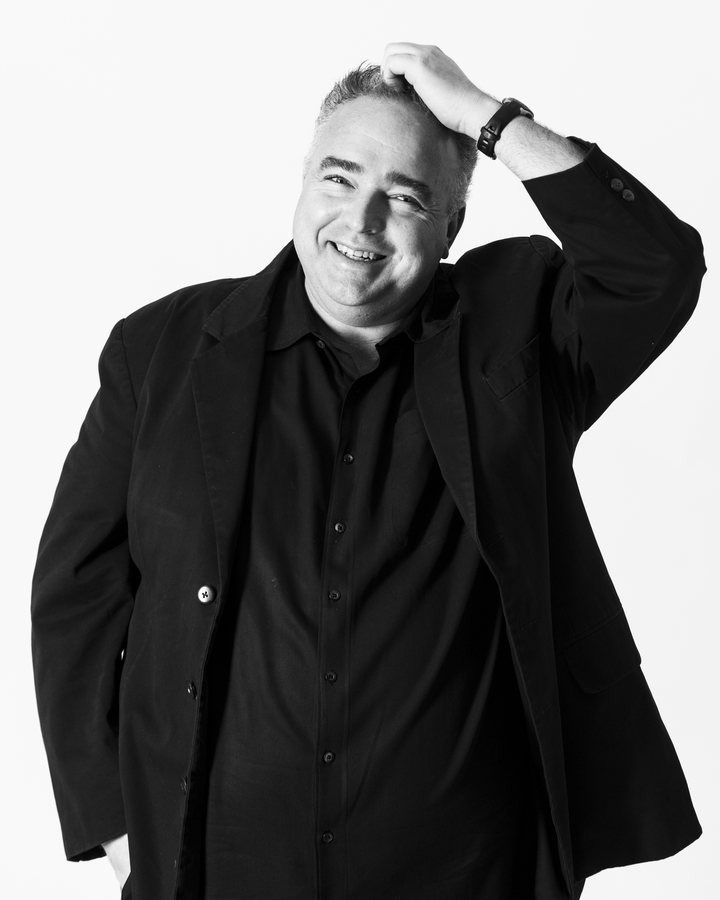
Christopher Gerteis is Senior Lecturer (Associate Professor) in the History of Modern and Contemporary Japan at SOAS University of London, and a Fellow of the Royal Historical Society (FRHistS). He works on the twentieth-century Japanese institutions that sorted people into governable categories. Unions and ministries counted wage-earning women; newspapers and the traffic police assembled delinquent youth out of motorcycle riders; pollsters and party strategists made a generation out of a cohort. His sources are the records those institutions kept of that sorting, read against the testimony of the people they classified. The two accounts rarely agree.
Gerteis came to history and Japanese Studies by way of the water. Through his teens and early twenties, he worked in and around it, beginning at a small suburban SCUBA shop and later serving as a deckhand aboard a topsail schooner. As an undergraduate, he continued working on the water as a dock master, maintenance hand, and sailing instructor for the university's fleet of racing and cruising sailboats. It was waged, seasonal work, organized by watch and rank. Those were the first institutions whose categories he worked inside, and they are the sort he has studied since.
His first experience of Japan came midway through his undergraduate degree, at a point when he was considering leaving university altogether. He took a year out with VIA, a nonprofit founded at Stanford University in 1963 as Volunteers in Asia. For six decades VIA has placed young Americans in volunteer and teaching posts across Asia, and brought Asian students to the United States, on the premise that understanding across cultures is built by living inside another one. VIA sent him to teach English in Hamamatsu, the manufacturing city in western Shizuoka where Honda, Suzuki, and Yamaha all got their start. He returned to UC Santa Cruz with focus and intent, and Japan has been at the center of his work ever since.
He came to computing as a university student in the late 1980s, building his own PCs from spare parts because he could not afford to buy one retail. The parts came from Fry's Electronics and WeirdStuff Warehouse, the two Silicon Valley tech meccas of the era. His first job out of college was with a failing Fortune 500 software company, which gave him an early view of how a large institution looks from the inside as it declines. He never stopped tinkering. Over more than three decades he has treated each new technology, from early digitized archives to large language models, as a resource for research and teaching in the humanities, and that habit now runs through his work in the computational humanities. He holds that play is the highest form of research, and computing is still where he plays most.
He was educated at the University of California, Santa Cruz (BA) and the University of Iowa, Iowa City (MA, PhD), and also undertook graduate study at Meiji University in Tokyo. Before joining SOAS in 2009, he held postdoctoral fellowships at Hōsei University's Ōhara Institute for Social Research and at the Yale University Council on East Asian Studies, and was a Fulbright Faculty Research Fellow at Sophia University in Tokyo. From 2019 to 2024, he was Project Associate Professor of Japanese History at the University of Tokyo's Institute for Advanced Studies on Asia. He has also held research appointments at Humboldt University of Berlin (2015–2016), Tokyo University of Foreign Studies (2016–2017), and the University of Heidelberg (2014, 2018).
Gerteis has supervised doctoral projects on the history of modern Japan, particularly through the intellectual lenses of labor, gender, youth culture, and historical memory. Six doctoral students have completed their degrees under his supervision and now hold positions at institutions including the University of Sheffield, the University of Bologna, Tohoku University, Seoul National University, and the University of Tokyo. He is a Fellow of the Higher Education Academy (FHEA), and welcomes inquiries from prospective doctoral students working at the intersection of historical scholarship, cultural studies, and digital humanities.
Research interests
His published work runs across the social and cultural history of Japan since the nineteenth century. It includes Gender Struggles: Wage-Earning Women and Male-Dominated Unions in Postwar Japan (Harvard, 2010), which won Second Prize in the European Association for Japanese Studies Book Award, and Mobilizing Japanese Youth: The Cold War and the Making of the Sixties Generation (Cornell, 2021), which received the SOAS Best Book Award in 2022.
His next book, 『日本の冷戦世代――青年政治意識の形成と分裂』 [Japan's Cold War Generation: The Formation and Fragmentation of Youth Political Consciousness], a substantially revised and expanded Japanese-language edition of Mobilizing Japanese Youth, is forthcoming from the University of Tokyo Press in 2026.
Recent work includes the article "Engines of Deviance: Newspapers, Traffic Cops, and Youth Rebellion in 1970s Japan" (International Journal of Asian Studies, 2026, open access) and 「選択的記憶と戦略的忘却:日本における歴史の商品化と産業遺産」 ["Selective Memory and Strategic Forgetting: The Commodification of History and Industrial Heritage in Japan"], published in the 『東洋文化研究所紀要』 [Bulletin of the Institute of Oriental Culture] (vol. 186, 2024), which built on his role as co-PI of the Hashima XR Project.
Building on a growing body of scholarship on videogames and historical memory, the HashimaXR Project (2020–2024) used videogame design tools to reconstruct the mid-twentieth-century coal-mining community of Hashima (Gunkanjima), centering everyday experience while holding open histories of wartime coerced labor that official heritage narratives exclude. The project concluded in 2024; Simulating Silence now carries the work forward as a standing public resource for educators and heritage professionals.
His work in the computational humanities includes the article "Writing Against the Machine: Computational Authorship and Historical Writing" (History, 2026, open access) and open-source research software for Asian-studies scholarship. Six MCP servers open the major bibliographic databases (CiNii, J-Stage, the National Diet Library, the Korea Citation Index, OpenAlex, and Semantic Scholar) to AI-assisted bibliographic discovery, and are distributed together as the bibliograph-mcp suite (2026).
His book Japan's Unfinished Empire: Origins and Afterlives, in preparation, responds to an institutional legacy of imperialist historiography by situating the Japanese empire as constitutive of modern state formation rather than as an aberration or a reactive policy. The project foregrounds settler colonialism, transregional labor, and administrative logics that linked domestic reform to colonial governance, emphasizing the recursive "scaled repetition" of imperial techniques across domestic and colonial spaces.
He publishes Past Meets Pixel @ Substack, exploring the intersection of history and video games, and Japanese Modernity @ Substack, focusing on historiography, memory, and global contexts. Both platforms foster collaboration among scholars, developers, and educators to rethink how historical knowledge is produced and shared.
He comments on Japanese affairs for broadcast and print media, including the BBC and the New York Times.
Major research awards and fellowships
- Japan Foundation Japanese Studies Fellowship (2026–2027), supporting 89 days of field research in Japan from October 2026.
- Daiwa Anglo-Japanese Foundation, Japan Foundation Endowment Committee, and SOAS University of London (2022), supporting the Hashima XR Project.
- University of Tokyo's Institute for Advanced Studies on Asia, research-in-residence (2019–2024).
- Japanese Ministry of Education (2016–2017), research-in-residence at Tokyo University of Foreign Studies.
- German Federal Ministry of Education and Research (2015–2016), research-in-residence at Humboldt University of Berlin.
- Writing support fellowships, University of Heidelberg's Karl Jaspers Center for Transcultural Studies (2014, 2018).
- Fulbright Faculty Research Fellow (2008–2009).
- Japan Society for the Promotion of Science Postdoctoral Fellow (2001–2002).
Editorial roles
- Co-General Editor (with Nakajima Takahiro), A Cultural History of East Asia (6 vols, Bloomsbury, forthcoming 2027).
- Founding Series Editor, SOAS Studies in Modern and Contemporary Japan (Bloomsbury, 2012–present).
- Executive Editor, International Journal of Asian Studies (2019–2024).
- Regional Editor for East Asia, International Journal of Asian Studies (2024–present).
- Chief Editor, Japan Forum (2014–present).
- Editorial Board Member, Power Currents: Asian Media in the World (University of Pittsburgh Press, 2024–present).
Invited talks / keynotes
- Invited Lecturer, "Playing with History: Exploring the Past through Video Games," Reading Branch of the Historical Association, Reading School, UK, 28 February 2025.
- Invited Lecturer, "Shifting Sands: Tracking the 'Political Awareness' of Japan's Sixties Generation (1973–1988)," conference "Who did the New Left Fight Against? Japanese Controlled Society and Resistance after 1970," Institute for Humanities, Kyoto University, 30 November 2024.
- Invited Paper Presentation, "Japan and the Global Cold War Order," conference "Japan, Asia, and the Cold War Liberal Order Revisited," Institute for Japanese Studies, Seoul National University, 14 December 2023.
- Keynote Speaker, "Serious Video Game Design for the Digital Humanities," Annual Conference of the Center for a Chinese Cultural Metaverse, National Chengchi University of Taiwan, Taipei, 8 December 2023.
- "Doing Digital Scholarship in the Age of the Metaverse," Academic Frontier Lecture Series, Global Focus on Knowledge, University of Tokyo, 17 June 2022.
- Guest Lecturer, "Research Methods and Publishing in Japanese Studies," series of seminars, Japan Foundation Collaborative Research Workshop for Aspiring Scholars in Japanese Studies, Tokyo University of Foreign Studies (2019-2024).
Panels and workshops chaired and convened
- Co-Convenor (with Kyoichi Nakamura), Hashima XR Nagasaki Symposium (端島XR長崎シンポジウム), Dejima Messe Nagasaki, Japan. 22 July 2023.
- Workshop Convener and Chair, "Japan Forum/Harvard Journal of Asiatic Studies Publishing Workshop for Early Career Academics." INALCO, Paris. 15 March 2019.
- Workshop Convener and Chair, "Japan Forum Workshop on the History of Disability." Japan Research Centre, SOAS, London. 1 March 2019.
- Workshop Convener, "BAJS / Japan Forum Workshop: Meiji Japan in Global History." Japan Research Centre, SOAS, London. 7–8 September 2017.
- Workshop Chair and Discussant, "Japan Forum Publication Workshop on Disability History." Dōshisha University, Kyoto. 17 June 2017.
- Panel Chair and Discussant, "State and Memory," Borders of Memory Conference. Kyushu University, Japan. 17–18 December 2016.
- Panel Chair and Discussant, European Forum on Korean-Japanese History. Brussels, Belgium. 18–20 December 2015.
- Panel Chair and Discussant, UFSP–GEAS Publication Workshop. University of Zurich, Switzerland. 13–15 December 2015.
- Panel Chair, "Changing Institutions in Japanese Studies," Engaging with Japanese Studies: Revisiting the Question as to Why Japan Matters. Nissan Institute, Oxford University, UK. 14–15 March 2013.
